
Certified Business
With over 10,000 orders
With over 10,000 orders
 FREE SHIPPING ON ORDERS OVER $50
 FREE SHIPPING ON ORDERS OVER £45
FREE SHIPPING ON ORDERS OVER $50
FREE SHIPPING ON ORDERS OVER £45
FREE SHIPPING ON ORDERS OVER $50
FREE SHIPPING ON ORDERS OVER £45
FREE SHIPPING ON ORDERS OVER $50
FREE SHIPPING ON ORDERS OVER £45
FREE SHIPPING ON ORDERS OVER $50
FREE SHIPPING ON ORDERS OVER £45
FREE SHIPPING ON ORDERS OVER $50
FREE SHIPPING ON ORDERS OVER £45
FREE SHIPPING ON ORDERS OVER $50
FREE SHIPPING ON ORDERS OVER £45
FREE SHIPPING ON ORDERS OVER $50
FREE SHIPPING ON ORDERS OVER £45
FREE SHIPPING ON ORDERS OVER £45
FREE SHIPPING ON ORDERS OVER $50
FREE SHIPPING ON ORDERS OVER £45
FREE SHIPPING ON ORDERS OVER $50
FREE SHIPPING ON ORDERS OVER £45
FREE SHIPPING ON ORDERS OVER $50
FREE SHIPPING ON ORDERS OVER £45
FREE SHIPPING ON ORDERS OVER $50
FREE SHIPPING ON ORDERS OVER £45
FREE SHIPPING ON ORDERS OVER $50
FREE SHIPPING ON ORDERS OVER £45
FREE SHIPPING ON ORDERS OVER $50
FREE SHIPPING ON ORDERS OVER £45
FREE SHIPPING ON ORDERS OVER $50
FREE SHIPPING ON ORDERS OVER £45

Photo by Jackery Power Station on Unsplash
This comprehensive guide is more than just a simple checklist; it is a deep dive into the fundamental systems and gear that form the backbone of any successful RV trip. From the critical life-support systems providing power and clean water to the comfort-enhancing gear that makes your campsite feel like a second home, we will explore the “why” behind each item.
We will provide specific features, practical implementation tips, and real-world examples to help you build the ultimate RV essentials list. This ensures you are prepared for whatever the road has in store for you. Throughout this guide, we will also highlight how thoughtfully designed gear, like the compact and reliable products from Trekology, can significantly enhance your mobile lifestyle. These items save precious space without sacrificing comfort or functionality. Let’s begin building the foundation for your most memorable adventures yet.
Your RV’s propane system is the lifeblood of off-grid comfort, powering everything from your furnace and water heater to your stovetop and refrigerator. It’s a core component that makes a recreational vehicle feel like a home, making it an undeniable top item on any comprehensive RV essentials list. The system consists of one or more propane tanks, a regulator that reduces the high pressure from the tanks to a safe, usable level for your appliances, and the hoses connecting them.
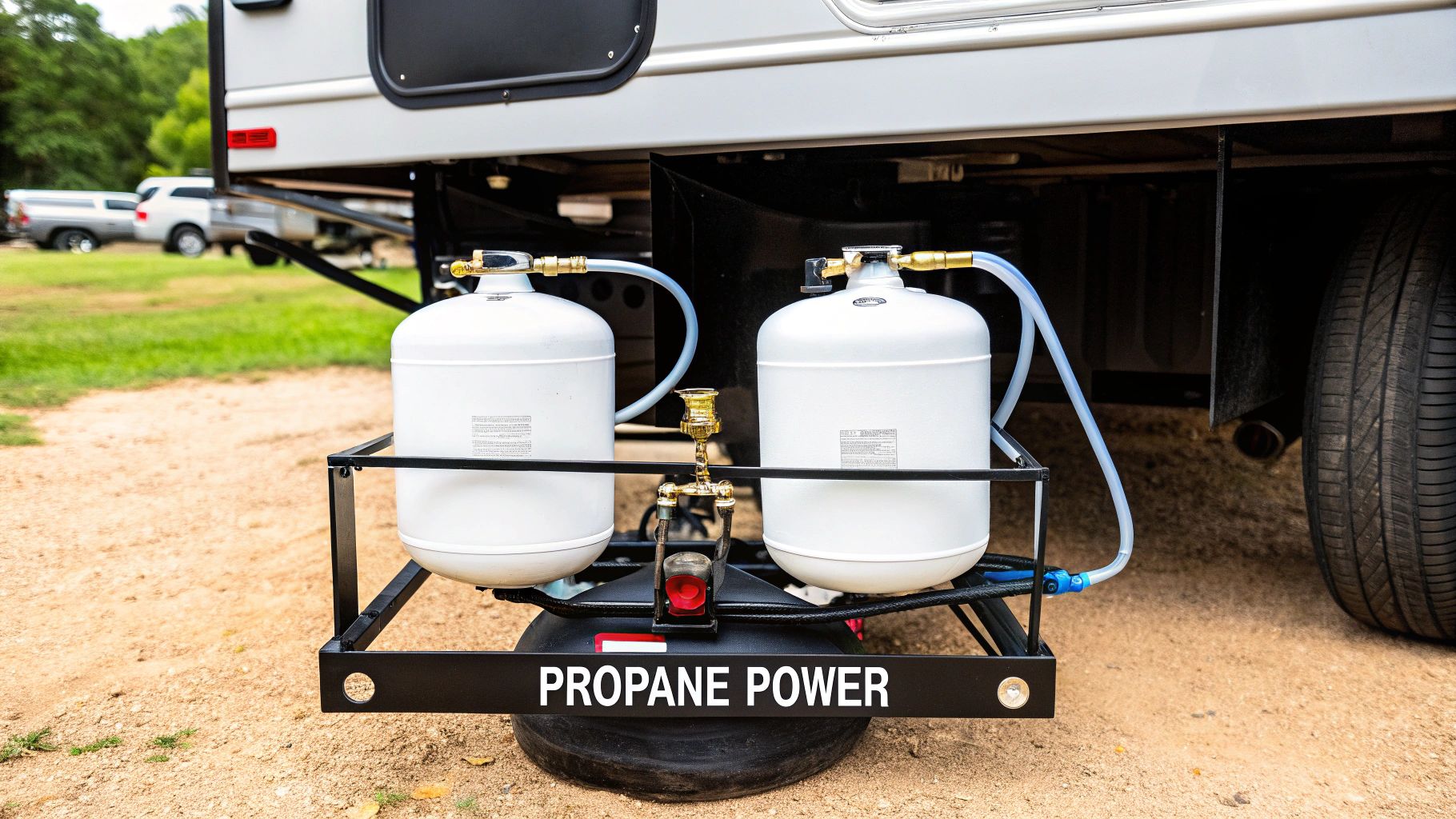
Understanding your setup is crucial for safe and efficient operation. Most travel trailers and fifth wheels use two 20- or 30-pound tanks, often from brands like Worthington Industries or Flame King, connected to an auto-changeover regulator. This brilliant device automatically switches to the full tank when the first one runs empty, ensuring an uninterrupted supply of propane. Class A motorhomes might have a large, frame-mounted ASME tank, which requires filling at a dedicated propane station.
To ensure your system runs smoothly and safely, integrate these practices into your regular RV maintenance routine:
Reliable access to clean water is a fundamental requirement for any successful RV trip, making the fresh water system a non-negotiable part of any RV essentials list. This system encompasses the fresh water holding tank, a water pump, all associated plumbing, and crucial filtration components. It delivers safe water for drinking, cooking, washing, and showering, providing self-sufficiency when dry camping or ensuring water quality when connected to inconsistent campground sources.
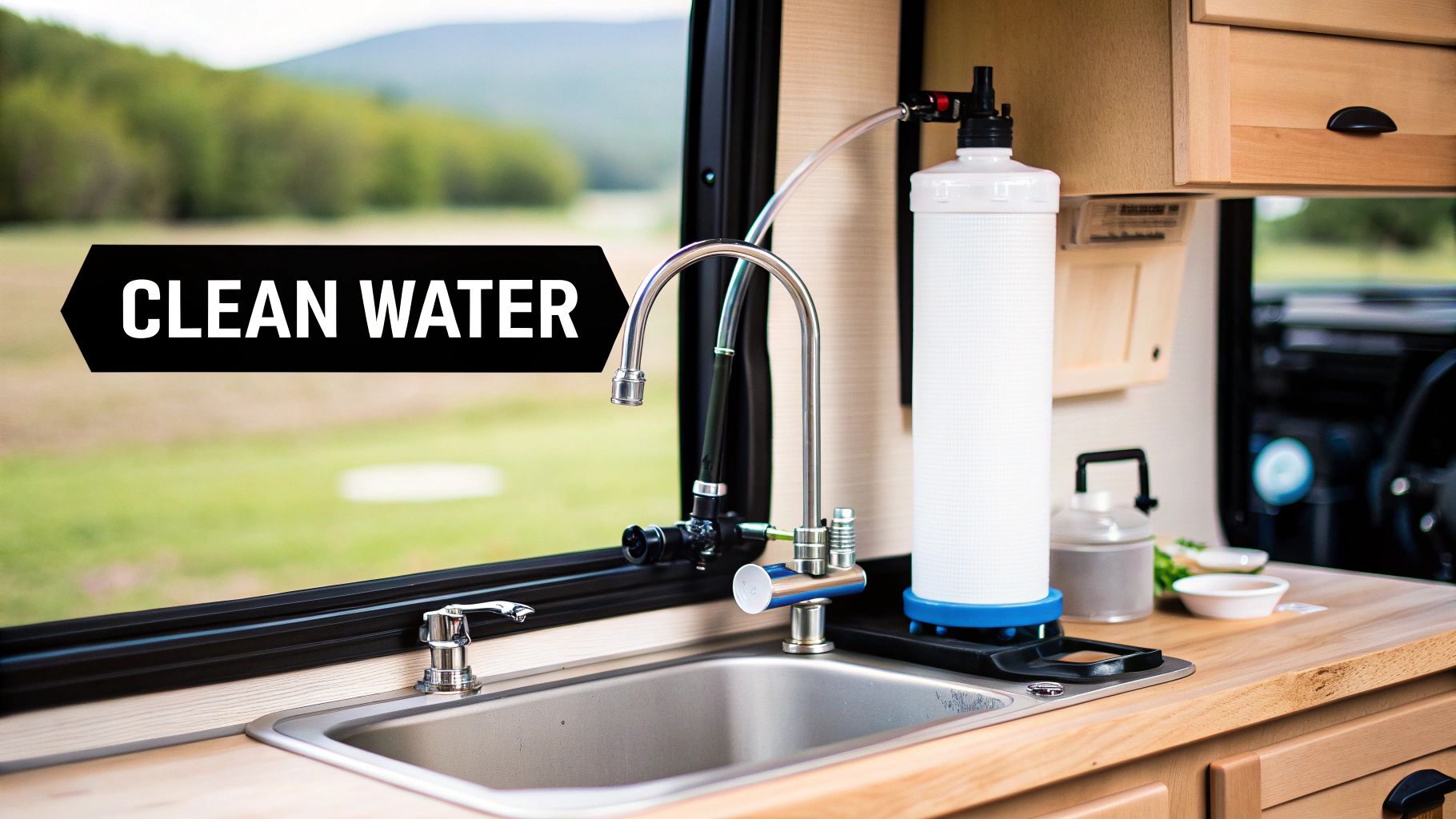
Understanding your RV's water system is key to staying healthy and comfortable on the road. Most RVs come equipped with a standard water pump, often from trusted brands like SHURflo, and an onboard tank. When considering the type and placement of your RV's fresh water tank, exploring options like vertical water storage tanks can help maximize space and efficiency. For filtration, many RVers rely on simple inline filters like the Camco TastePURE for city water connections, while full-timers often invest in more robust countertop systems like a Berkey for superior purification.
To maintain a safe and efficient fresh water supply, incorporate these practices into your RV lifestyle:
The electrical system is the central nervous system of your RV, providing the power needed for lights, appliances, and electronic devices. It’s a hybrid system, combining a 12-volt DC side powered by your battery bank for off-grid living and a 120-volt AC side for when you're connected to shore power. A robust electrical setup is fundamental for boondocking and energy independence, making it a non-negotiable component of any RV essentials list. The core elements include deep-cycle batteries, an inverter (to change 12V DC to 120V AC), a converter (to charge batteries and run 12V systems from shore power), and often, solar panels.
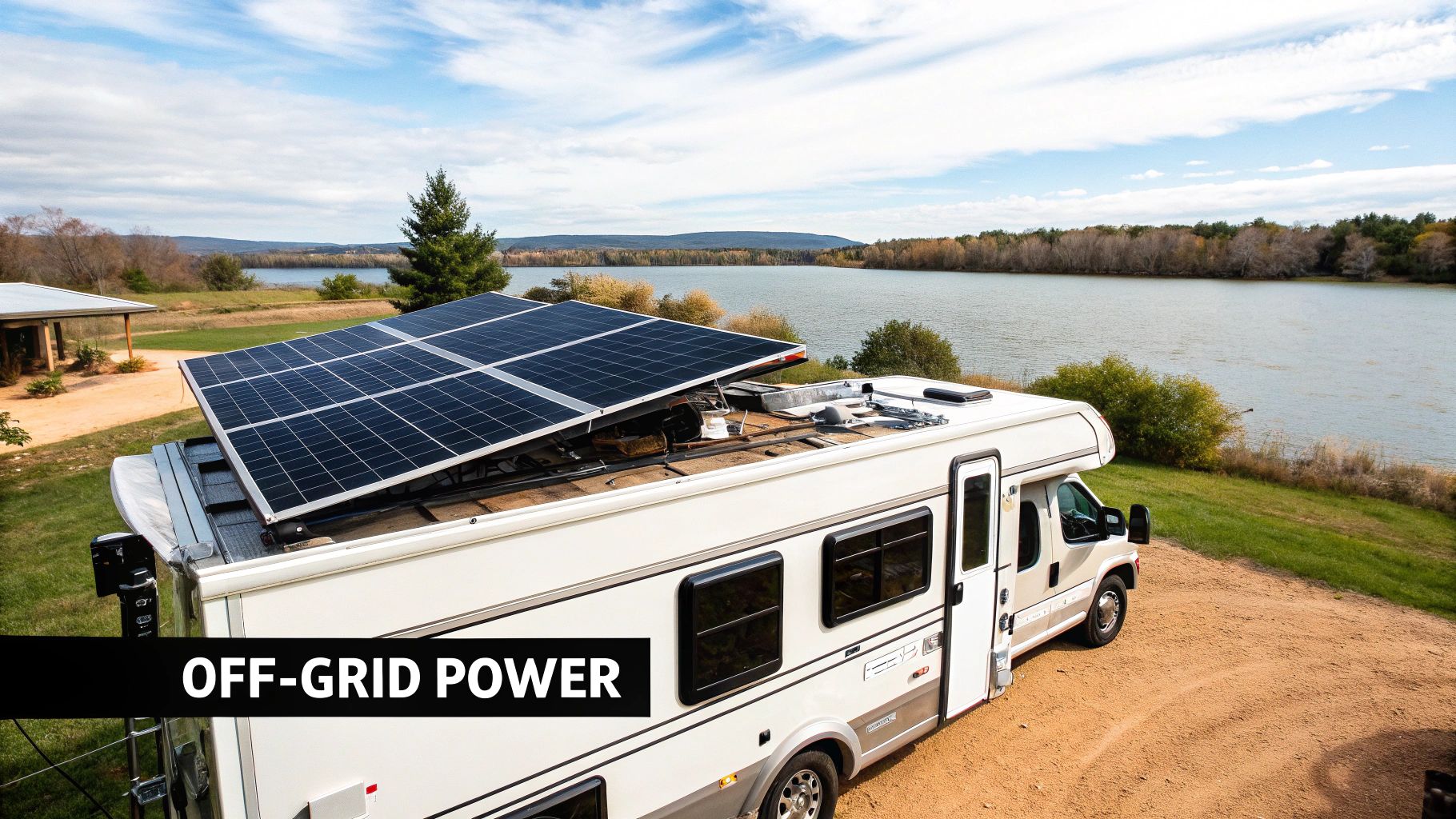
Understanding your power needs and system capabilities is key to a successful trip. High-end motorhomes and serious boondockers often invest in premium lithium systems from brands like Battle Born Batteries or complete setups from Victron Energy, known for their efficiency and longevity. For smaller campers or those needing supplemental power, portable power stations from companies like Goal Zero offer a flexible solution. The quality of your battery bank and components from innovators like Renogy Solar directly impacts your freedom to camp unplugged.
To maintain a reliable and safe electrical system, incorporate these practices into your RV ownership routine:
Often the least glamorous but most critical aspect of RV life, the waste management system is what truly enables self-contained travel. It handles both gray water (from sinks and showers) and black water (from the toilet) by collecting them in separate holding tanks. This system is non-negotiable for hygiene, environmental compliance, and overall comfort, making it a foundational component of any comprehensive RV essentials list. A properly managed system prevents odors, clogs, and unpleasant mishaps at the dump station.
Understanding your RV’s plumbing is key to a hassle-free experience. Most RVs come equipped with reliable toilets from brands like Dometic or Thetford Corporation. The black tank collects toilet waste, while the gray tank collects water from your sinks and shower. When it's time to empty them, a heavy-duty sewer hose connects your RV's outlet to the campground's dump station inlet. High-end motorhomes may even feature macerator systems, which grind waste and pump it through a smaller hose, making the dumping process cleaner and more flexible.
To keep your system clean, sanitary, and functioning correctly, incorporate these essential practices into your RV routine:
A properly leveled and stabilized RV is essential for comfort, safety, and the correct operation of your appliances. An unlevel rig can cause your refrigerator to malfunction, tank sensors to read incorrectly, and doors to swing open or shut unexpectedly. This system, a non-negotiable part of any rv essentials list, ensures your home-on-wheels is a stable and functional living space, preventing the unnerving rocking motion every time someone walks around.
The type of system varies widely by RV class. Large Class A motorhomes often feature sophisticated automatic hydraulic systems from brands like Lippert Components or HWH Corporation, which level the entire coach with a single button press. Travel trailers and fifth wheels commonly use manual or electric stabilizer jacks, often from BAL RV Products, in combination with interlocking leveling blocks like the popular Lynx Levelers. These blocks are placed under the tires to achieve a level position before the stabilizers are deployed to eliminate wobble.
To master the art of setting up a perfectly stable campsite, incorporate these techniques into your arrival routine. Making sure you are prepared for your RV trip with the right knowledge is key.
Your RV’s climate control system is the key to comfortable living on the road, turning your rig into a sanctuary from scorching summer heat or brisk autumn chills. This integrated system, which includes your air conditioner, furnace, and ventilation, manages the interior temperature and air quality, making four-season travel not just possible, but enjoyable. Its role in maintaining a livable environment makes it a non-negotiable component of any serious rv essentials list.
Most RVs come equipped with a combination of systems to handle different conditions. Rooftop air conditioners, like the popular Dometic Brisk II or Coleman-Mach series, provide powerful cooling. For heat, a propane furnace is standard, while some modern rigs feature highly efficient hybrid systems like the Truma Combi, which combines both the furnace and water heater. Understanding how these components work together is essential for maintaining comfort and maximizing energy efficiency, whether you’re plugged into shore power or boondocking.
To keep your system running efficiently and ensure your comfort in any weather, incorporate these practices into your RV routine:
In the modern era of travel, a reliable internet and communication system has transitioned from a luxury to a fundamental component, making it a critical entry on any RV essentials list. For digital nomads, families streaming movies, or anyone needing to stay in touch, your setup is the bridge to the outside world. It typically involves a combination of cellular boosters, mobile hotspots, Wi-Fi extenders, or satellite systems designed to overcome the connectivity challenges inherent in a mobile lifestyle.
A robust system ensures you can work, navigate, and communicate from almost anywhere. Many RVers rely on a multi-pronged approach for maximum uptime. This often starts with a powerful cellular signal booster from brands like WeBoost, which amplifies weak cell signals. This is frequently paired with a dedicated mobile router, such as those from Pepwave, which can manage multiple data sources (like two different cellular carriers) for uninterrupted service. For ultimate off-grid connectivity, Starlink for RVs has become a game-changer, providing high-speed internet via satellite.
To maintain a strong and stable connection on the road, incorporate these strategies into your travel planning and setup:
Your RV is a home on wheels, and protecting it and its occupants from potential hazards is non-negotiable. Comprehensive safety and security equipment is a foundational part of any responsible RV essentials list, addressing threats from fire and gas leaks to break-ins and medical situations. This gear is not just for peace of mind; it is often required by law and essential for maintaining insurance coverage, making it a critical investment for every RVer.
A robust safety system includes several layers of protection. Your first line of defense is detectors, like the Safe-T-Alert models standard in most RVs, which monitor for carbon monoxide (CO) and propane (LP) gas. These are complemented by smoke alarms and a properly rated fire extinguisher, with brands like Kidde being widely recommended for their reliability. Security can be enhanced with sturdy door locks, wheel chocks, and even motion-activated lights. For optimal longevity and protection of your entertainment system, consider investing in an anti-rust RV TV mount, essential for handling diverse weather conditions.
Integrate these practices into your RV routine to ensure you are always prepared for an emergency:
A well-equipped kitchen turns your RV from a simple vehicle into a home on wheels, allowing you to prepare delicious, cost-effective meals wherever your travels take you. Equipping your galley is a key part of any RV essentials list, focusing on tools that maximize cooking capabilities within the unique space and power constraints of mobile living. This involves selecting specialized appliances, cookware, and storage solutions designed for the road.
The modern RVer’s kitchen often features multi-functional appliances like an Instant Pot for easy one-pot meals or a Ninja Foodi that combines air frying, pressure cooking, and more. For outdoor cooking, a Blackstone griddle is a popular choice to keep heat and cooking odors outside. The goal is to create a functional cooking space that doesn't feel cramped. To make the most of your RV's limited galley space, explore practical small kitchen ideas to maximize both storage and style.
To create an efficient and enjoyable cooking experience, implement these strategies for outfitting and using your RV kitchen:
One of the greatest joys of RVing is extending your living space into the great outdoors, and a well-planned outdoor setup transforms your campsite into a comfortable and functional oasis. This essential category includes everything from your RV's built-in awning to portable furniture, grills, and lighting. It's what turns a simple parking spot into an alfresco dining room, a cozy lounge, or an evening entertainment hub, making it a critical part of any complete RV essentials list.
Your RV likely came with a factory-installed awning from a major brand like Dometic or Carefree of Colorado, which provides the foundation for your outdoor patio. Complementing this with high-quality, weather-resistant furniture is key. Brands like RecPro offer chairs and tables specifically designed to be lightweight and compact for easy storage. Add in an outdoor rug to define the space and keep dirt out of your rig, and you have the perfect foundation for enjoying nature in comfort.
To maximize your outdoor enjoyment and protect your gear, incorporate these practices into your camping routine:
| System | Implementation Complexity 🔄 | Resource Requirements ⚡ | Expected Outcomes 📊 | Ideal Use Cases 💡 | Key Advantages ⭐ |
|---|---|---|---|---|---|
| Propane Tank and Regulator System | Moderate – involves tanks, regulators, valves | Requires propane tanks and safety gear | Reliable fuel for cooking, heating, refrigeration | Off-grid cooking and heating without electrical hookup | Independent fuel source, low refill cost |
| Fresh Water System and Filtration | Moderate – plumbing, pump, filtration setup | Water tanks, pump, filters | Clean drinking water, consistent pressure | Dry camping, uncertain external water quality | Improves water quality, reduces illness |
| Electrical System and Battery Bank | High – batteries, inverters, solar, monitoring | Deep-cycle batteries, solar panels, inverters | Off-grid power for appliances and devices | Extended boondocking, renewable energy users | Enables extended off-grid power, renewable energy |
| Waste Management System | Moderate – tanks, valves, sensors, pumps | Holding tanks, treatment chemicals | Sanitary waste disposal, environmental compliance | Extended camping without hookups | Maintains sanitation, environmental safety |
| Leveling and Stabilization System | Low to Moderate – manual or automatic jacks | Jacks, blocks, electronic controllers | Proper RV leveling, improved comfort and appliance function | Campsite setup, RV stability | Enhances comfort and safety, saves setup time (auto) |
| Climate Control System | Moderate – HVAC units, furnaces, fans | AC units, furnaces, thermostats | Year-round temperature and air quality control | All-season RV travel | Comfortable interior, efficient heating/cooling |
| Internet and Communication Setup | High – antennas, boosters, routers, satellite | Cellular boosters, satellite internet | Reliable connectivity for work and safety | Remote work, entertainment, emergency communication | Enables connectivity, multiple backup options |
| Safety and Security Equipment | Low–detectors, extinguishers, kits | Smoke/CO detectors, fire extinguishers | Protection from hazards, emergency readiness | Required safety compliance, peace of mind | Life/property protection, required by insurance |
| Kitchen and Cooking Equipment | Low to Moderate – appliances and cookware | Compact appliances, cookware | Home-cooked meals, energy-efficient cooking | Mobile meal prep, dietary needs on the road | Saves money, familiar comforts, space-saving tools |
| Outdoor Living Setup | Low to Moderate – awnings, furniture, lighting | Awnings, outdoor furniture, grills | Extended living space and outdoor comfort | Outdoor relaxation, entertaining guests | Expands living area, enhances camping experience |
As we've journeyed through this comprehensive RV essentials list, it has become clear that a successful and enjoyable life on the road is a symphony of interconnected systems. True preparation isn't about stuffing every possible gadget into your rig. It's about a deep, practical understanding of the core components that transform a vehicle into a home. Your adventure's success hinges on these foundational pillars, from the electrical system humming quietly beneath the floor to the fresh, clean water flowing from your tap.
Each category we've explored, from critical utility systems to outdoor comfort, plays an indispensable role in your safety, convenience, and overall freedom. Mastering your RV is about recognizing these connections. You'll see how a reliable leveling system not only prevents your eggs from sliding in the pan but also ensures your RV’s refrigerator functions correctly. It’s about understanding that your safety net includes both the CO detector inside and the sturdy trekking poles you rely on for stability during a scenic hike.
Moving beyond a simple checklist to genuine preparedness involves a mindset shift. Instead of just buying items, think about the function each item serves within your unique travel style. The goal is to build a personalized, efficient, and reliable mobile ecosystem.
With this knowledge, you are now equipped to finalize your own definitive RV essentials list. Don't just copy what you've read; adapt it. Walk through your RV, visualize your daily routines, and anticipate potential challenges on the road.
Mastering your RV essentials is the key that unlocks the true promise of the open road. It empowers you to handle the unexpected, to live comfortably in diverse environments, and to focus not on what might go wrong, but on the incredible experiences waiting for you just over the horizon. You've done the research. You understand the systems. Now, all that's left is to pack with purpose, travel with confidence, and embrace the adventure.
As you build out your perfect mobile adventure kit, consider how smartly designed gear can elevate your experience. For lightweight, durable, and incredibly portable solutions for everything from seating to sleeping, explore the innovative outdoor essentials from TREKOLOGY. Their focus on compact, reliable equipment makes them an ideal partner for any RVer looking to maximize comfort and minimize clutter on their journey.
Leave a comment